

Issue Date: August 21, 2026
Climate Change Management
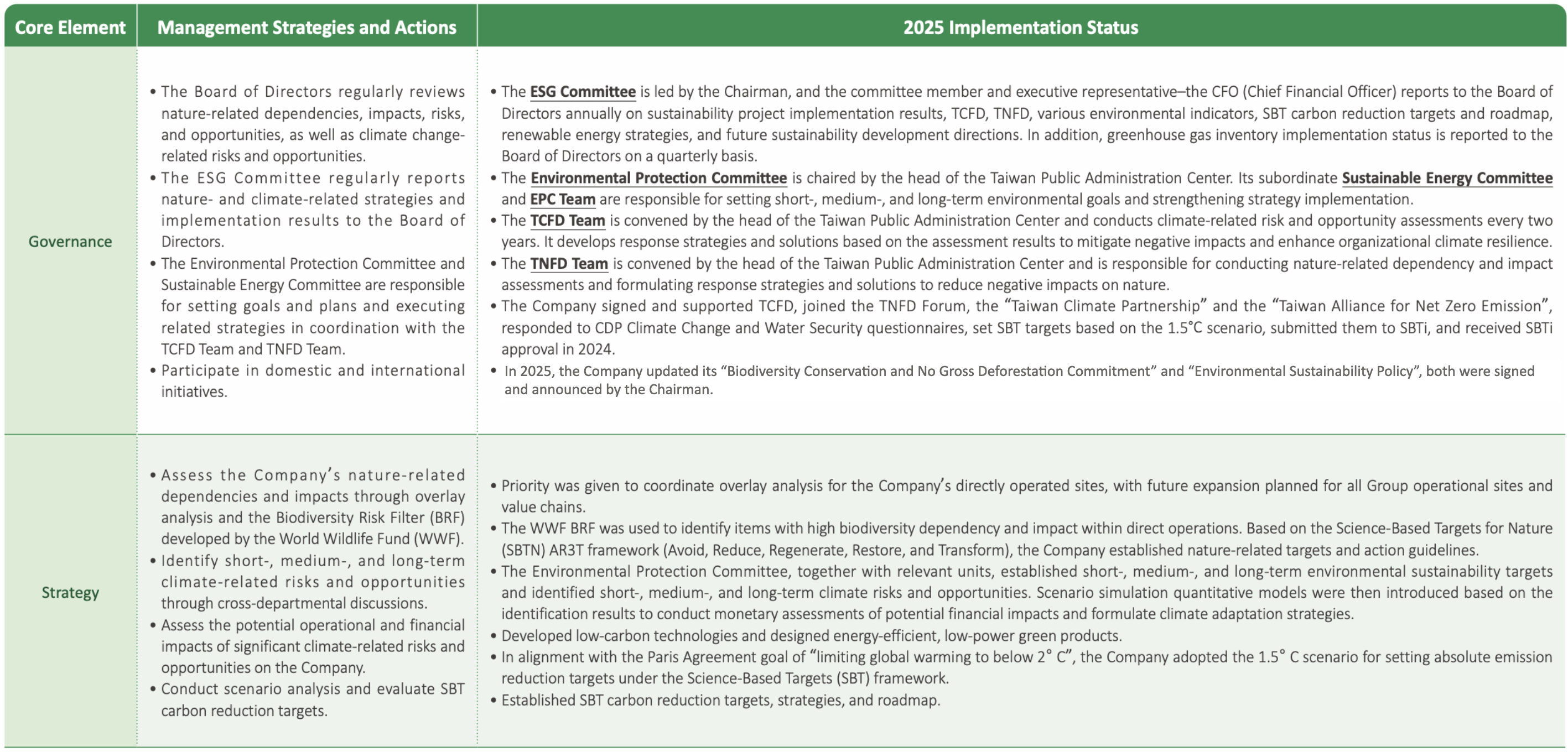
To effectively mitigate the significant economic, social, and environmental impacts of extreme climate events, Coretronic adopted the TCFD framework in 2020 to assess climate-related risks. Centered around low-carbon products and green operations, the Company has formulated energy-saving and carbon reduction strategies to help curb the greenhouse effect. At the same time, to ensure that operational activities do not damage biological habitats and to reduce dependence on and consumption of natural resources, the Company adopted the Taskforce on Nature-related Financial Disclosures (TNFD) framework in 2025 to systematically analyze the dependencies and impacts of its operational sites on the natural environment. In response to the Paris Agreement, the Company established carbon reduction targets based on the Science-Based Targets initiative (SBTi) absolute reduction roadmap under the “1.5°C warming” scenario. In 2022, the Company publicly announced its “Net Zero Commitment” and submitted its commitment letter to the SBTi. In 2023, the Company submitted its SBT carbon reduction targets: Reduce absolute Scope 1 and 2 GHG emissions 50.4% by 2032 from a 2021 base year, and reduce absolute Scope 3 GHG emissions 30% within the same timeframe. These targets were approved by the SBTi in 2024. To achieve net zero by 2050, Coretronic is actively reducing fossil fuel use, increasing renewable energy adoption, transitioning to innovative low-carbon technologies, and incorporating the environmental cost of carbon emissions into business planning through internal carbon pricing and other diversified measures.
In 2025, the Company conducted its greenhouse gas inventory following the ISO 14064-1:2018 standard, identifying emission sources for Scope 1 through Scope 3. The organizational boundary for this inventory includes facilities under operational control at Taiwan plants (Headquarters, Chunan Plant, Tainan Plant 1, and Tainan Plant 2) and China plants (Coretronic Optotech (Suzhou), Coretronic Optics (Suzhou), Coretronic Projection (Kunshan), and Coretronic Optics (Kunshan)).
Nature and Climate Management Framework
Taskforce on Nature-Related Financial Disclosures (TNFD)
Coretronic formally adopted the TNFD framework in 2025 and progressively introduced the LEAP (Locate, Evaluate, Assess, Prepare) assessment approach to systematically identify, assess, and manage nature-related dependencies, impacts, risks, and opportunities. The Company joined the TNFD Forum to stay informed of the latest international sustainability and nature-related financial disclosure trends. To ensure that biological habitats are not damaged and to reduce the consumption of natural resources, the Company has taken action from the source by comprehensively optimizing production processes and adopting recycled raw materials to reduce the ecological impacts of raw materials. Coretronic also actively collaborates with value chain partners to achieve biodiversity goals and progressively incorporates nature-related issues into operational decision-making in order to develop more comprehensive environmental conservation strategies.
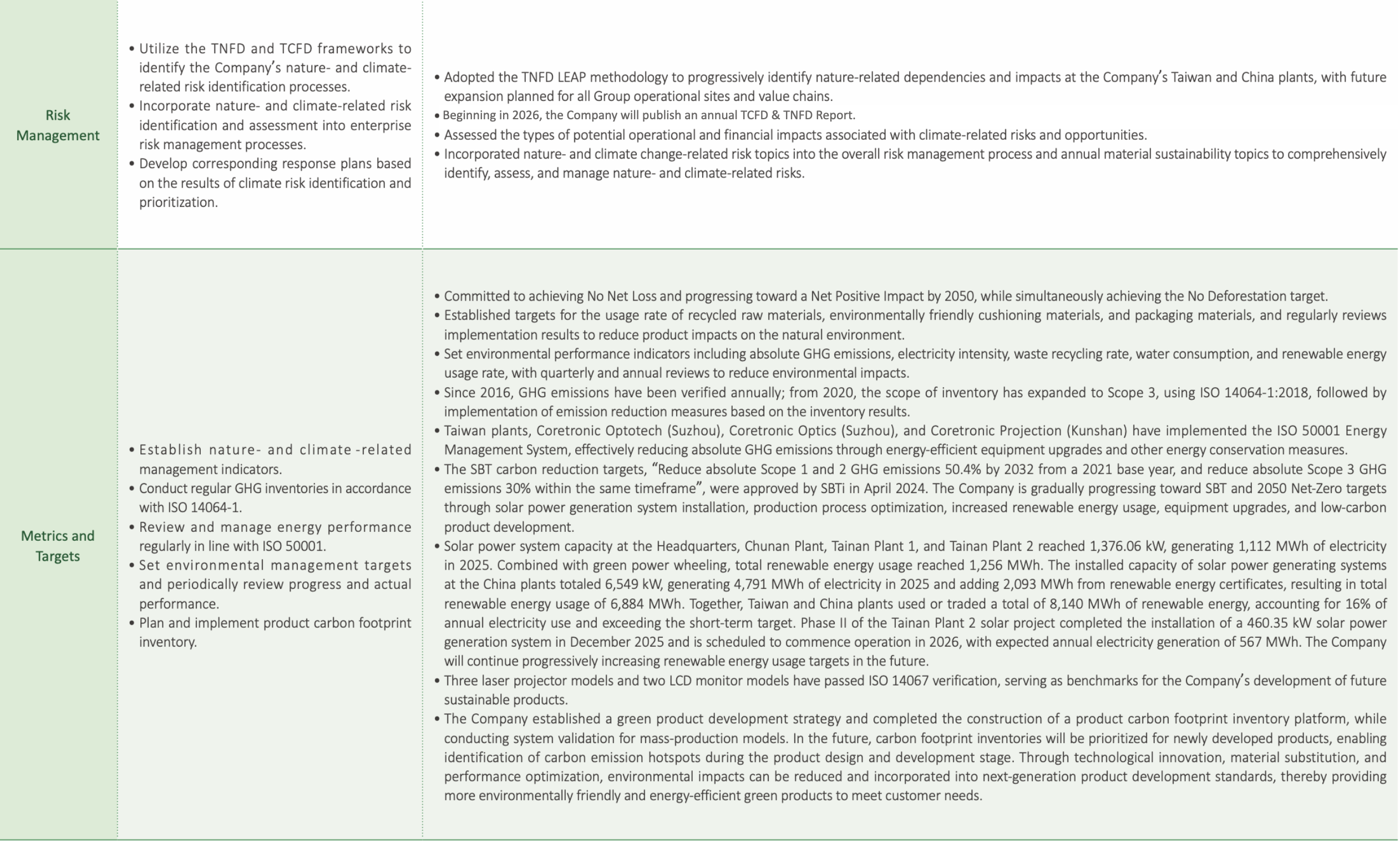
In addition, to preserve biodiversity and eliminate deforestation activities, Coretronic established the “Biodiversity Conservation and No Gross Deforestation Commitment”, which was personally signed and announced by the Chairman. By adopting the SBTN AR3T framework (Avoid, Reduce, Restore and Regenerate, and Transform), the Company actively implements ecological conservation actions to strengthen the resilience and adaptive capacity of natural systems, reduce the environmental impacts of operational activities, and commit to achieving No Net Loss and progressing toward a Net Positive Impact by 2050, while simultaneously achieving the No Deforestation target.
▶ LEAP Assessment Steps and Process
In accordance with the TNFD disclosure framework, the Company has adopted the LEAP methodology to conduct systematic and integrated disclosure of nature-related information. Considering that dependencies on and impacts to natural capital may vary depending on geographical location and business operation characteristics, related targets and strategies will be planned and adjusted according to different scenarios and conditions. The current scope of analysis primarily focuses on the Company’s own operations. Going forward, the Company will continue strengthening the assessment and management of nature-related issues and progressively expand the assessment scope to include the value chain in order to enhance overall risk oversight and management effectiveness.

Locate (L)
In accordance with the recommendations under the Locate (L) phase of the TNFD LEAP methodology, Coretronic prioritized the identification of whether its directly operated plants are located within ecologically sensitive areas. The assessment process utilized a Geographic Information System (GIS) and referenced protected area mapping data designated under Taiwan and international biodiversity-related regulations and conservation programs. The assessment scope covered Taiwan’s legally protected areas, including national parks, nature reserves, wildlife reserves, major wildlife habitats, protected natural areas, national natural parks, and important wetlands, as well as non-statutory conservation areas such as conservation corridors within the National Ecological Green Network. The assessment also incorporated protected area data from the International Union for Conservation of Nature (IUCN), including Category Ia Strict Nature Reserves, Category Ib Wilderness Areas, Category II National Parks, Category III Natural Monuments, Category IV Habitat/Species Management Areas, Category V Protected Landscapes/Seascapes, and Category VI Protected Areas with Sustainable Use of Natural Resources, to evaluate the environmental impacts of the Company’s operational sites in Taiwan and China and areas within a two-kilometer radius surrounding those sites.
The analysis results indicated that none of Taiwan or China plants are located within overlapping statutory or internationally protected areas. However, Tainan Plant 1 and Tainan Plant 2 are located within conservation corridors of the National Ecological Green Network. In response, the Company will continue monitoring ecological environmental changes and developments in relevant conservation policies within the area, while appropriately assessing the potential impacts of operational activities on surrounding ecosystems and strengthening monitoring and management measures to reduce impacts on nature.
Evaluate (E)
Following completion of the plant location analysis, the Company further utilized the Biodiversity Risk Filter (BRF) developed by the World Wildlife Fund (WWF) to conduct biodiversity-related physical and reputational risk assessments for the sites within the reporting boundary of this report. Based on the longitude and latitude coordinates, industry characteristics, and operational criticality of each operating site, the Company identified its dependencies and impacts on the natural environment. Assessments covered a total of 33 biodiversity-related physical and reputational risks across eight major categories, including “Provisioning Services”, “Regulating and Supporting Services—Empowerment”, “Regulating Services—Mitigation”, “Cultural Services”, “Biodiversity Pressures”, “Environmental Factors”, “Socioeconomic Factors”, and “Other Reputational Factors”. The overall analysis results indicated that the Company’s biodiversity-related issues included one very high-risk item, three high-risk items, and the remainder categorized as medium or low risk. Among these, the “Pollution” indicator was assessed as a “Very High Risk”, primarily due to the assessment tool that determines risk levels using a composite index methodology. Considering that the Company’s operations are located within science parks and that comprehensive emission control mechanisms have already been established, all operations comply with applicable regulatory requirements, and risk management measures have been effectively implemented through environmental management practices.
Prepare (P)
To respond to the identified nature-related dependencies, risks, and impacts, the Company follows the SBTN AR3T framework (Avoid, Reduce, Restore and Regenerate, Transform) as the core principle for managing nature-related issues. Based on this framework, the Company plans internal resource allocation and action strategies, systematically evaluates the effectiveness and feasibility of various action plans, and regularly tracks targets and management performance to reduce the impacts of operational activities on the natural environment and enhance the Company’s natural resilience.
Task Force on Climate-Related Financial Disclosures (TCFD)
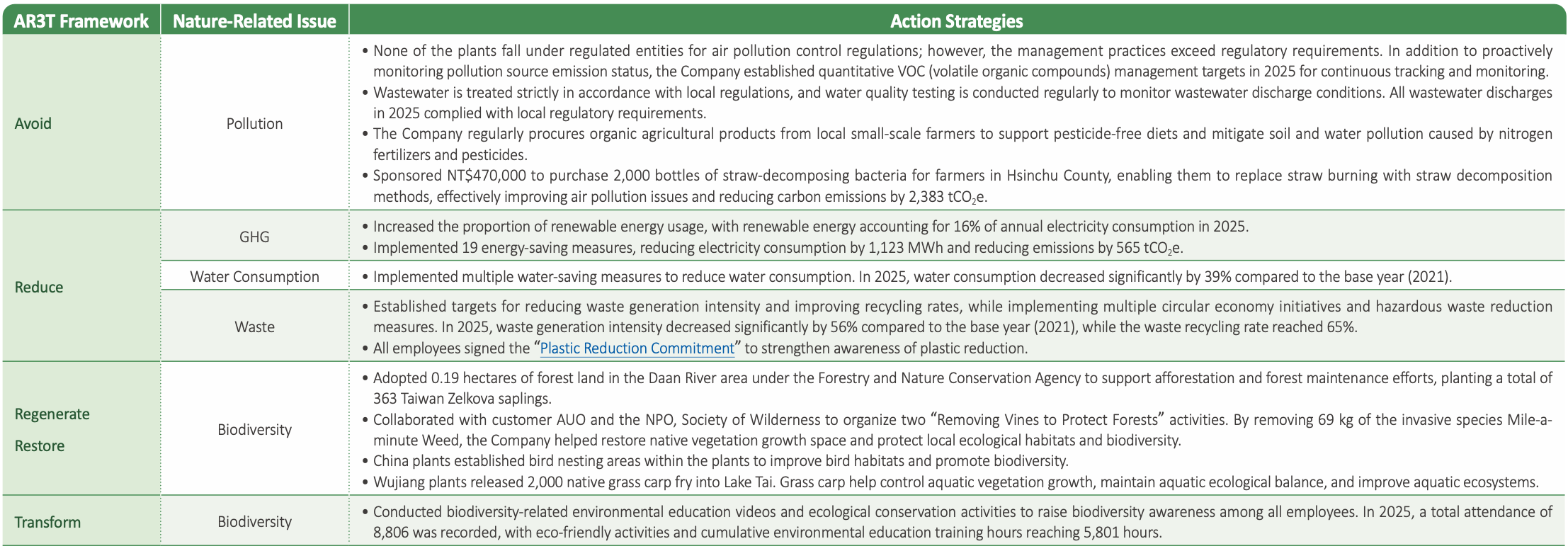
In response to global climate regulations and net-zero trends, Coretronic has actively aligned with international initiatives by adopting the TCFD framework since 2021 to conduct climate-related risk and opportunity identification as well as potential financial impact analysis. At the same time, the Company established a biennial identification mechanism to dynamically adjust response strategies, optimize financial impact analysis, and integrate climate resilience into corporate operational decision-making.
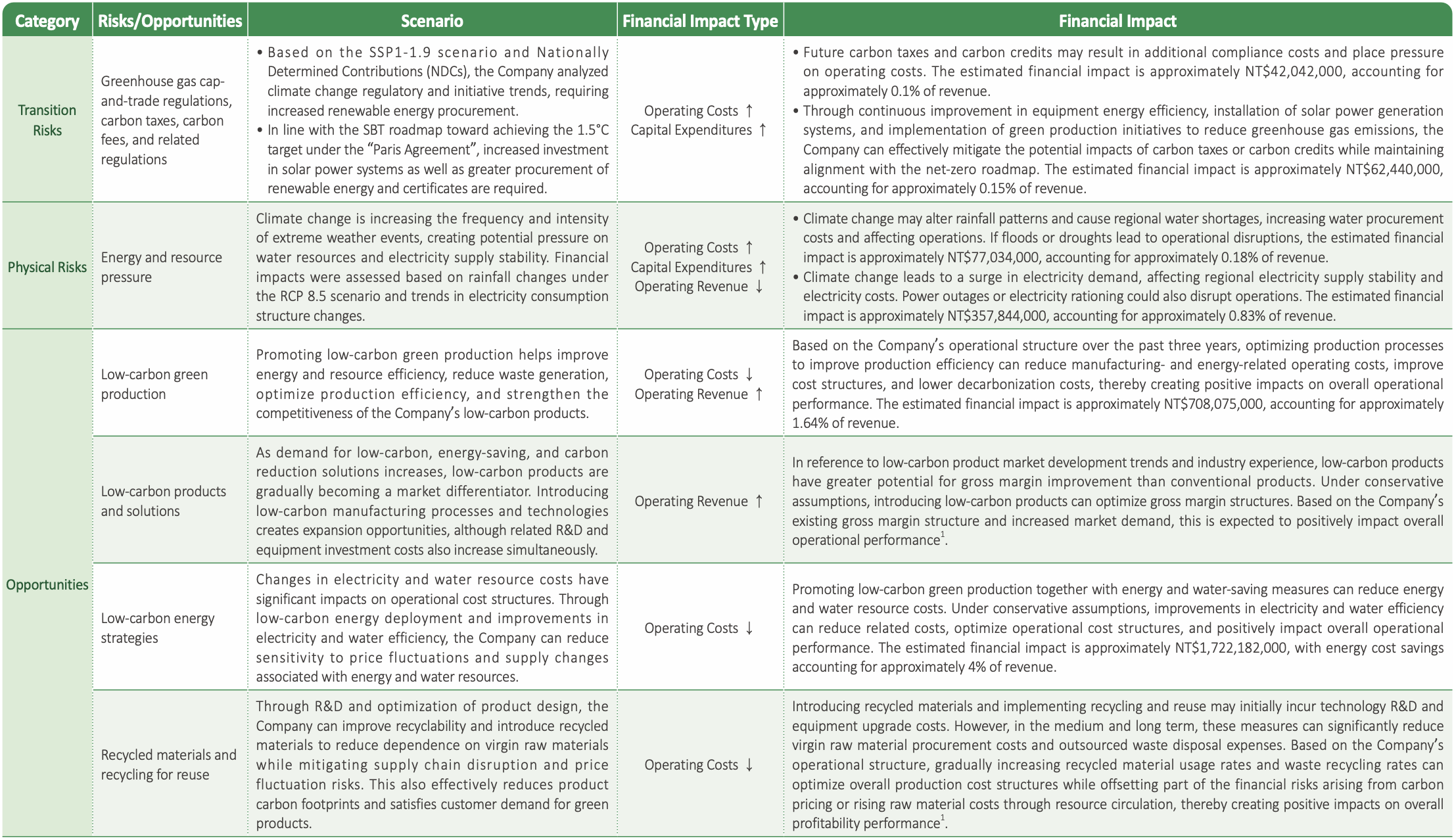
In 2025, based on international climate change trends and stakeholder concerns, the Company identified various climate-related risks and opportunities, including transition risks (policy and regulatory risks, technology risks, market risks, and reputational risks), physical risks (acute risks and chronic risks), and opportunities, in order to establish a climate risk and opportunity inventory. Ultimately, a total of five transition risks, two physical risks, and seven opportunities were identified. For each identified risk and opportunity, quantitative assessments were conducted regarding type of potential impact, impact intensity, and likelihood of occurrence. Risks and opportunities were then classified and prioritized according to the assessment results, and corresponding response strategies were formulated to reduce negative impacts, strengthen organizational climate resilience, and create future business opportunities.
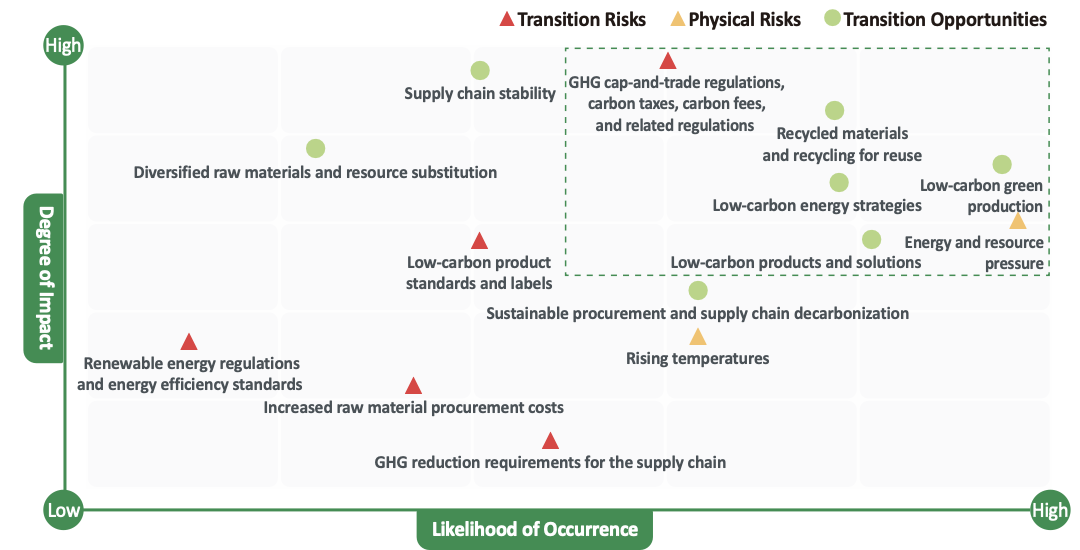
Potential Financial Impact Analysis and Response Strategies of Climate-Related Risks and Opportunities
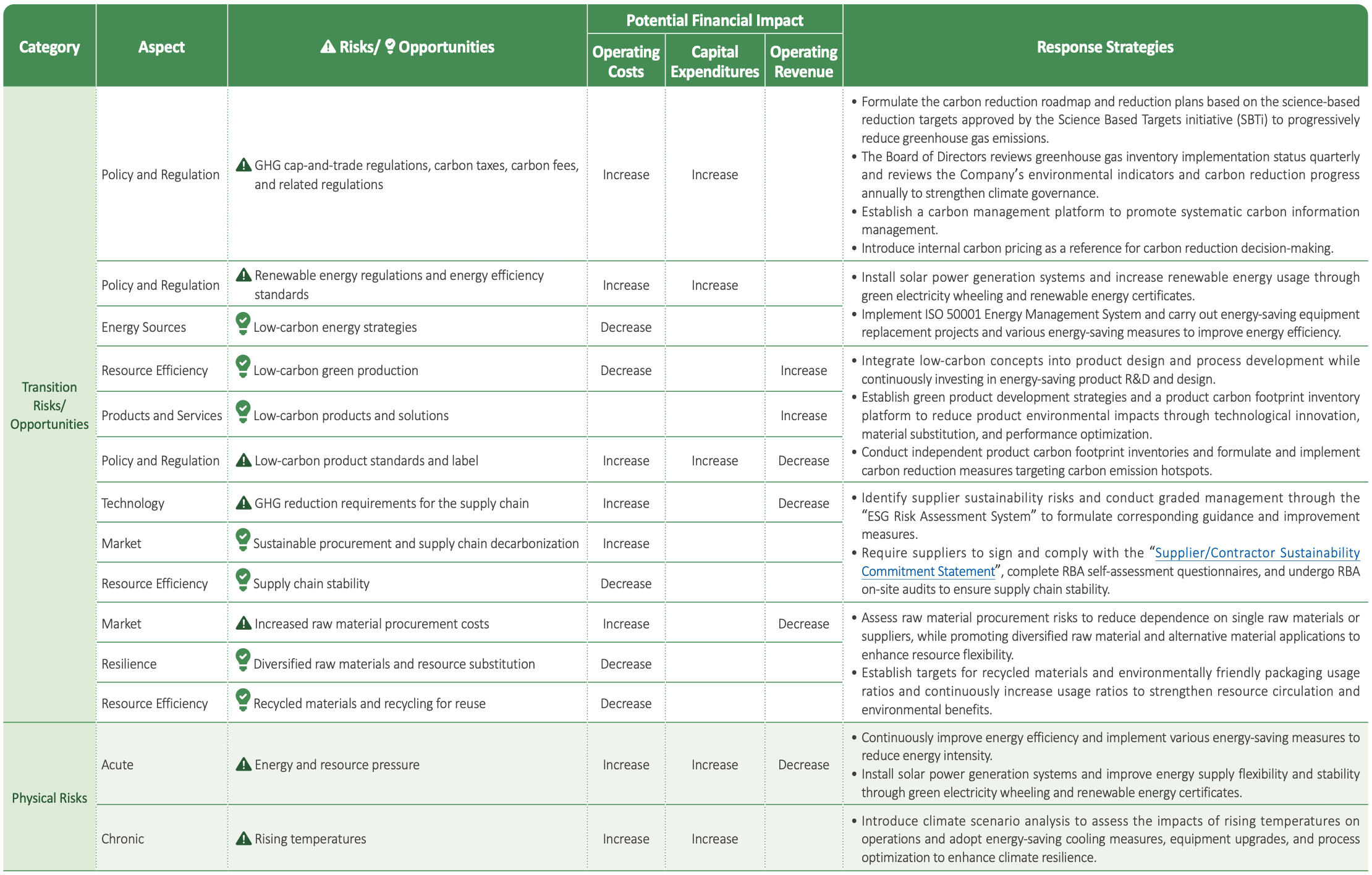
Financial Impacts of Climate-Related Risks and Opportunities
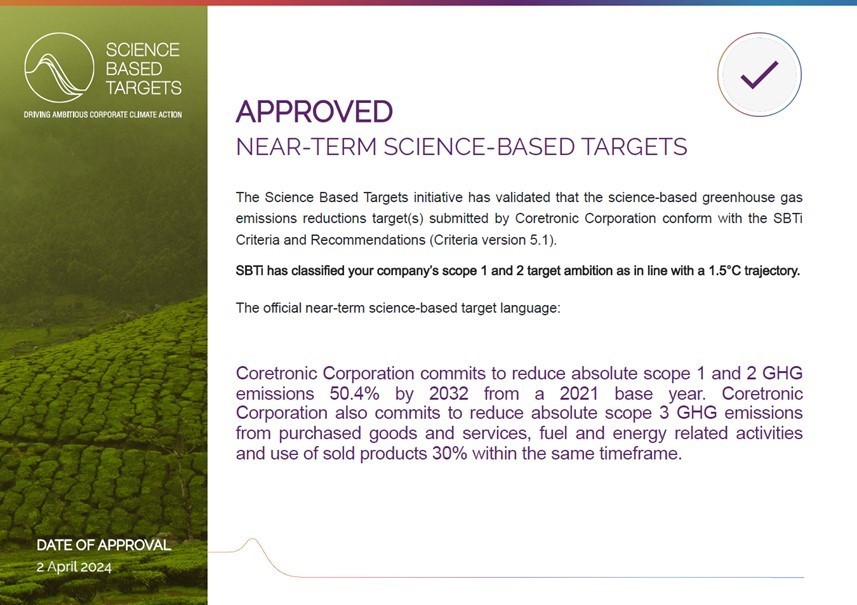
Net-Zero Targets and Achievement
Coretronic announced its “Net Zero Commitment”, joined the TNFD Forum, the Taiwan Climate Partnership and the Taiwan Alliance for Net Zero Emission, and actively supports and participates in key domestic and international initiatives such as TCFD, TNFD, CDP, and SBTi, demonstrating its strong commitment to environmental sustainability.
In 2022, Coretronic submitted the commitment letter to the SBTi, setting targets based on the 1.5°C scenario. In 2023, the Company formally submitted science-based targets aligned with the 1.5°C scenario: “Reduce absolute Scope 1 and 2 GHG emissions 50.4% by 2032 from a 2021 base year, and reduce absolute Scope 3 GHG emissions 30% within the same timeframe”. These targets were officially approved by SBTi in 2024, laying a solid foundation for the Company’s long-term carbon reduction strategy.
Coretronic has completed the CDP assessment questionnaire for seven consecutive years. In 2025, the Company achieved a Leadership level (A) in Climate Change and a Management level (B) in Water Security, both exceeding global and industry averages. Relevant management initiatives will continue to be promoted.
In 2025, total absolute greenhouse gas emissions (Scope 1 and Scope 2) amounted to 26,286.1 tCO2e, representing a 45% reduction compared to the base year (2021). Total absolute greenhouse gas emissions (Scope 3) amounted to 437,395.5 tCO2e, representing an 88% reduction compared to the base year (2021). The absolute emission reduction performance significantly exceeded the expected SBT carbon reduction roadmap.